Newsletter Subscribe
Enter your email address below and subscribe to our newsletter

 BySonu
The 1681.7 Login Troubleshooting Guide explains common causes of authentication failures and how to address them. It covers quick fixes to regain access, such as verifying credentials and reviewing recent activity for anomalies. It then outlines secure password and two-factor reset steps, secure token handling, and controlled recovery procedures. Guidance on when to contact support follows, with prep-ready details to minimize downtime. The document ends by offering a structured path forward, inviting practitioners to act with precision.
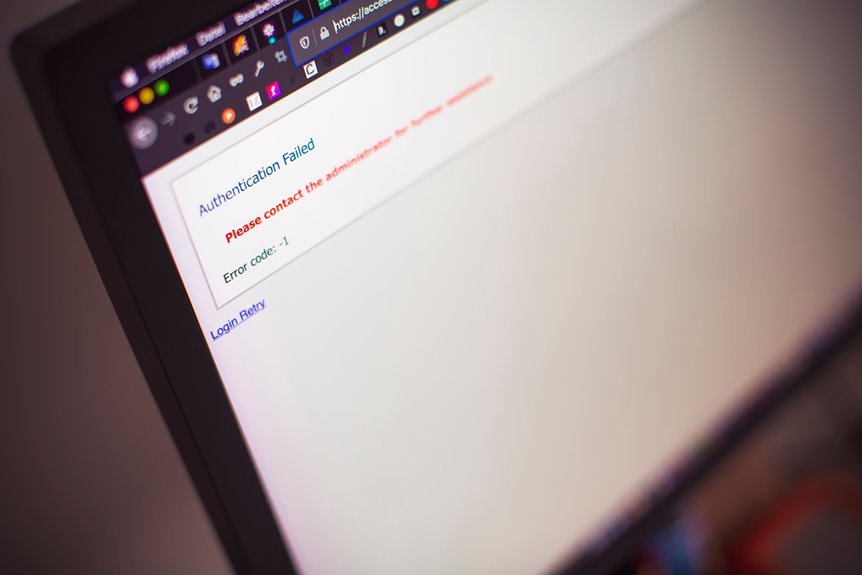
Login trouble labeled as 1681.7 refers to a specific error code or diagnostic category used to indicate authentication issues within a system. The designation signals credential verification problems, session mismatches, or policy conflicts. Causes vary: misconfigurations, expired tokens, or unusual login patterns. For Subtopic, unrelated ideas1, unrelated ideas2. Understanding exits quickly, with transparent criteria and consistent responses, supports user autonomy and system integrity.
To regain access immediately, users should start with rapid, practical checks that address common authentication blocks. Basic steps include verifying password security practices, confirming caps lock and keyboard layout, and ensuring correct username entry. If issues persist, reassess recent account activity for anomalies. These quick verifications emphasize user authentication integrity while preserving freedom and efficiency.
The section outlines secure password management and two-factor reset procedures, emphasizing verifiable identity, minimal exposure, and tested recovery paths. It describes stepwise verification, secure login practices, and controlled token handling. Users follow concise prompts to initiate reset, confirm ownership, and complete a two factor password reset. Processes minimize risk while preserving autonomy and freedom to access accounts.
Determining when to contact support is essential to minimize downtime and credential exposure. The article advises prompt escalation when suspicious activity arises, such as unauthorized access or repeated login failures.
Prepare concise details: timestamps, device identifiers, affected accounts, and recent changes. Include phishing awareness notes, confirm not to ignore warnings, and provide contact channels. Support will guide credential rotation and security verification steps.
The guide cannot be accessed offline; it requires online connectivity. It supports mobile access, but not in offline mode. Users seeking freedom can utilize secure, device-based credentials to enable responsive, cross-platform access across compatible mobile environments.
Symbolically, a gate and key reveal that login reliability may be affected by third party apps. The system notes potential interference, advising caution. Third party apps can impact login reliability, warranting careful testing and disciplined user choice.
There is no publicly published outage schedule for 1681.7. However, outage scheduling is not uncommon, and stakeholders should monitor status pages and incident notices to assess login reliability and plan contingencies accordingly.
Biometrics integration combines fingerprint or iris data with system authentication, supplementing security tokens for multi-factor access. It enhances convenience while maintaining control; security tokens remain optional, enabling fallback access and stronger audit trails within 1681.7’s framework.
Shadows over borders illuminate regional access constraints; can users in certain locales reach 1681.7 freely. The policy emphasizes device compatibility and compliant access, allowing independence only where regional access rules align with supported devices and authentication standards.
The guide clarifies that most login troubles arise from credential mistakes, session mismatches, or policy conflicts, and that rapid recovery hinges on verified identity and correct credentials. An interesting statistic to deepen understanding: organizations report up to 50% of helpdesk tickets relate to password issues or simple authentication errors. By following quick fixes, secure resets, and prepared support data, users regain access swiftly while preserving account security and autonomy.